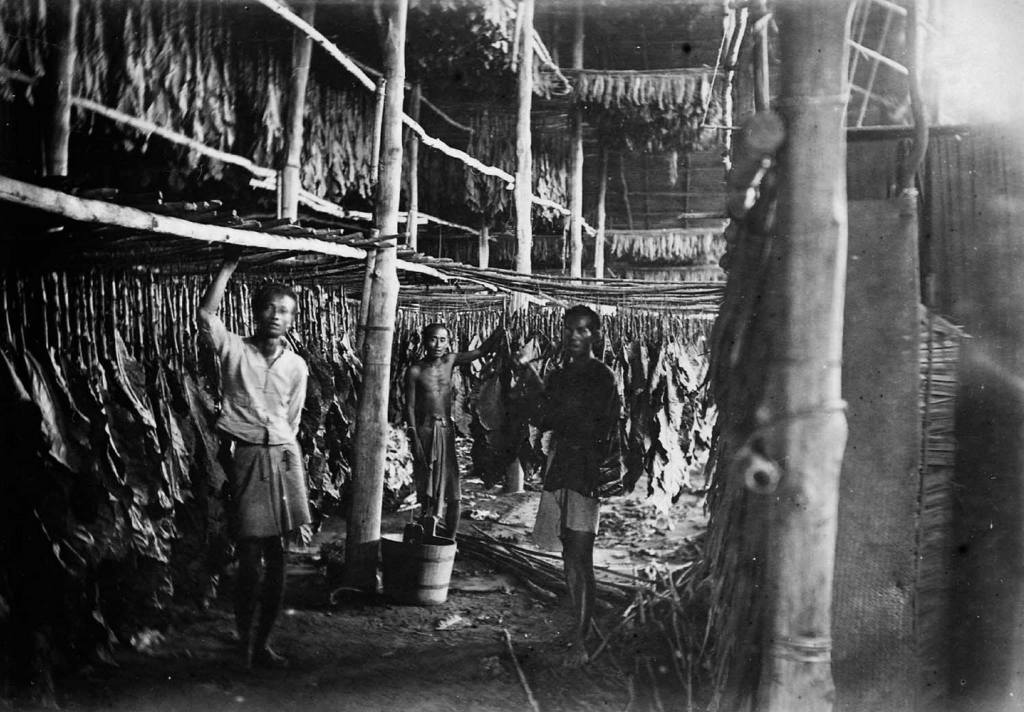
Dixon, 1913
A Chinese is a coward by nature. Rarely will he commit an attack openly or alone.
If he has any intention, he will secure the support of some comrades beforehand. As soon as they got a support, a secret covenant is made, sealed by the slaughter of a chicken, blood oaths are sworn, faithfully assisting one another, punished together if they were caught, and never betray each other.
However solemnly these oaths are taken, however binding they may be on a Chinese, there is usually a snitch among the conspirators who, eager for a monetary reward, betrays the plot to the main tooth, so that he is able to be picked up and placed in safekeeping.
Sometimes a strong, resolute action shatters such oaths.
A Chinese, who is not one of the bravest, is always in awe of boldness and daring.
As a good businessman, when he makes a profitable year by growing good tobacco in the field, he will not think of putting those profits at risk by doing something criminal against the company or one of the Europeans.
Because making money is everything to him!
For this, he left his country, and that is what his entire endeavors are directed towards.
If his tobacco has been in good shape for a year now, if he is sure that he will make a great “oentong” (profit), then he will not complain about anyone or anything.
He is then calm, docile; easy in every respect for his chiefs, in the quiet and pleasant assurance that a good profit will be paid to him at the close of the harvest year. But in the opposite case, if the coolie has the prospect of earning little or nothing at all for a year by circumstances, his attitude is quite different.
Troubled, loudly, he now seeks quarrel or “perkaras” in every possible way, trying to get the administrator to release him from his contract.
Especially during the barn time, when the harvest is completely in, the fermented tobacco is laid by the coolies in the specially designated sorting sheds, or in the fermentation shed itself according to color and length: so-called ‘sorted’, they have ample time to to discuss their grievances among themselves.
When sorting usually takes two to three months, depending on whether the harvest is greater or less, the coolies, who are then together day by day, have ample opportunity to do so.
It is not uncommon at this time to go against the clerk himself, with whom the coolies are sometimes dissatisfied because, in their opinion, he has not made their tobacco pay high enough, or the help they receive during the field time.
The planters have avoided much cause for dissatisfaction by informing the coolies of their account during the field time.
To this end, the so-called ‘green booklets’ have been put into use, in which the assistant of the department contains the advance received, the number of days they have been helped by others, the tools provided, the price of the tobacco they have handed in, in a word, everything. As far as their account is concerned, is submitted every six months. As these booklets are issued regularly every half month, they are constantly informed, always know their account and the assistant has a better opportunity to check the advertisements, if necessary. To correct errors than in the past, when the statements were not published until after the harvest, which often made it very difficult to verify the correctness of the objections, sometimes relating to facts already months old.
Even today, however, the sorting time remains the most difficult of the entire year, not only for the administrator but also for all Europeans. Much tact and seamanship is part of avoiding, or resolving, unpleasant “perkaras.” If the coolies have real or perceived grievances, it is entirely natural to argue against them “en masse.” If the complainants are not proved right by the administrator, then they go to the regional inspector, sometimes hours away, to expose their case to him.
From: Dixon, C.J., 1913. De assistent in Deli: practische opmerkingen met betrekking tot den omgang met koelies. JH de Bussy.
 Stories from Deli
Leave a comment