
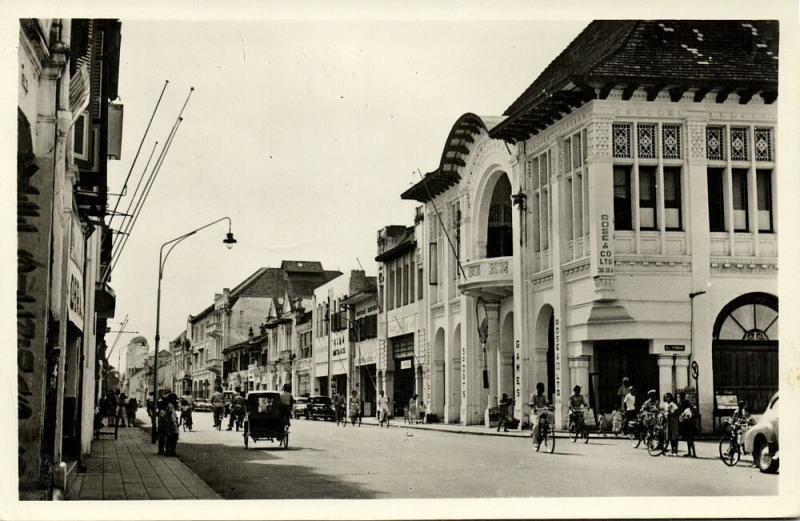
There is a street in Medan called Shawan Street (Kesawan). The shops on both sides of the street are mostly run by foreigners, including Standard Chartered Bank, a department store, a dance hall, and a cloth shop opened by an Indian……., the only shop run by Chinese at that time was “Chinese Business “Book Printing Company”, “Democracy Daily” is located on the second floor of the company. There is also a bookstore opened by foreigners “Varekamp” Drukkerij en Boekhandel, where all foreign books are on display. Across the street was Ter Meulen restaurant. Once, when I went in and browsed, there was a book on the shelf that caught my attention. The title of the book was “Malam di Medan” , or a “A Night in Medan”. The title of this book is very romantic and reverie. I haven’t read the content of the book, and I don’t know what is written in it. I guess now, it may be a touching love story, or it may describe the night view of Medan.
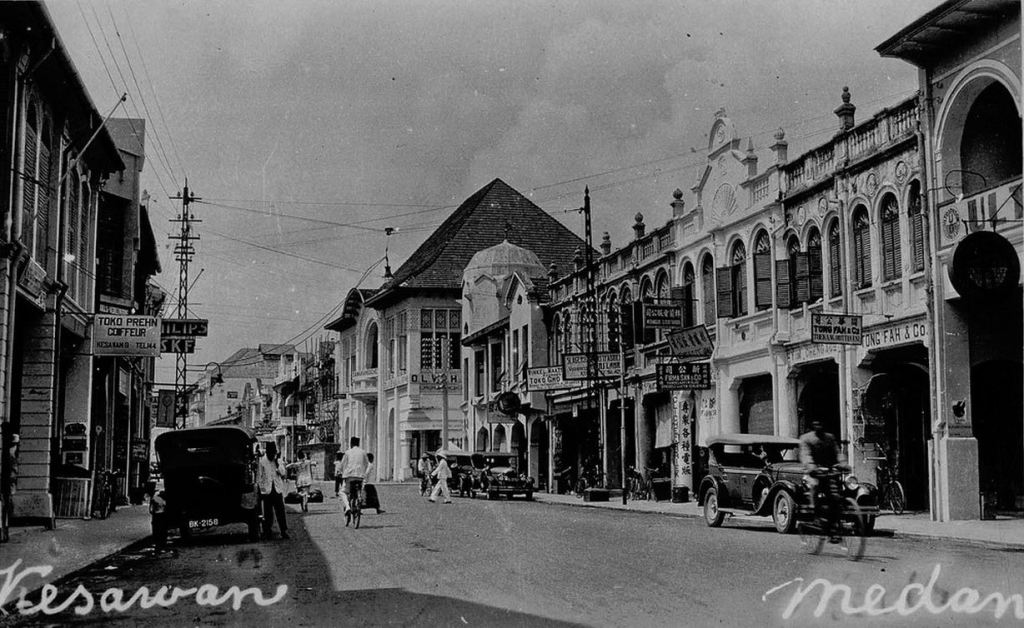
The other side of Kesawan was the office of Varekamp & Co., publishers of the Sumatra Post and next to Varekamp the house of Tjong A Fie.
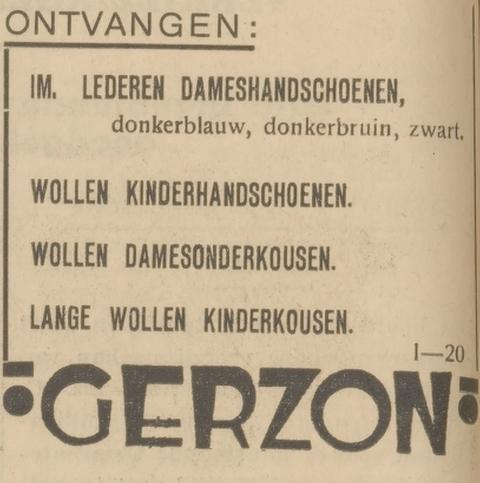
In the shopping street there were all kind of shops like Gerzon’s, clothing store.
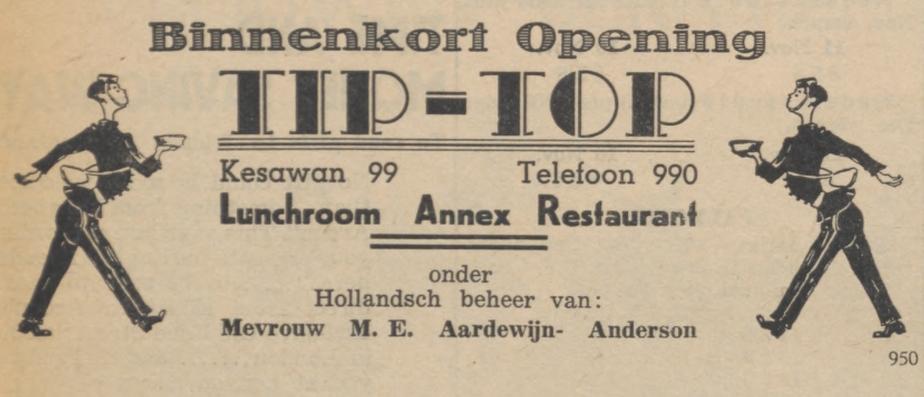
Tip Top
The fashion house De Zon opened on 16 October 1939 is the ‘fashion warehouse’, with absolutely everything of fashion articles for ladies and gentlemen.
The furniture shop of Hwa Nam (No. 74)
Bata (No 88-90)
The import -export firm of Geo Wehry moved to the old Maison Dusson

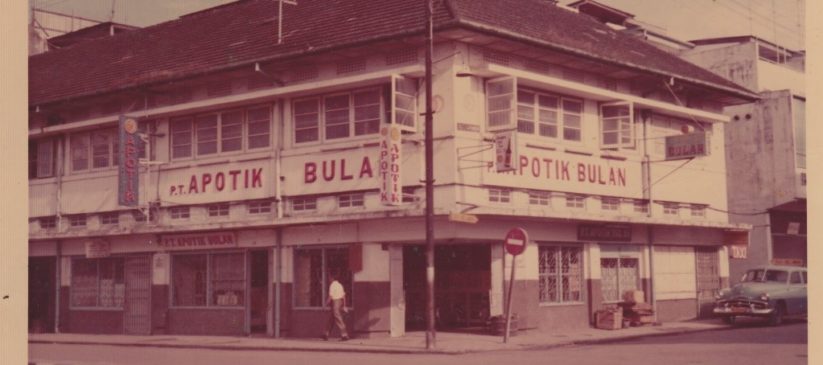
Moon Dispensary or Hiu Ngi Fen (later became Apotik Bulan) was on No. 50


S.D. Kaper specialized in Motor Sport.
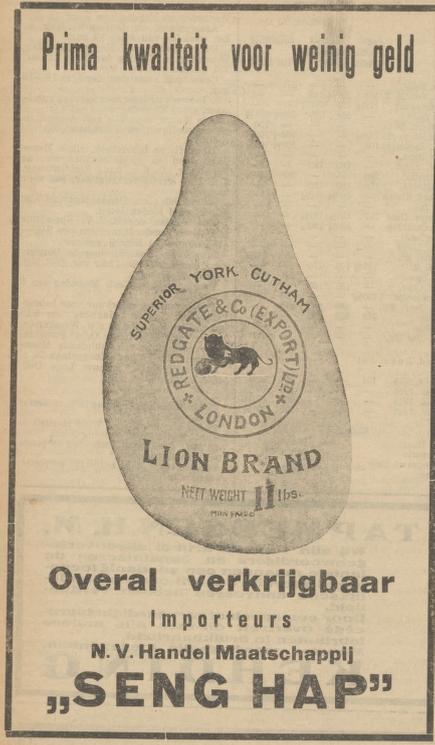
At Kesawan No. 1 was Seng Hap, established by Tan Tang Ho in 1880s. Tan Tang Ho was one of the leading Chinese businessmen in town, and later succeeded by his son Tan Boen An, the first Chinese member in the town council.
Lunchroom Epperlein, who also had the best ice cream and bakery.
Drukkerij en Boekhandel (Toko Buku Deli),
Toko Sin Huat Lie Kwie , shop for luxury items (such as bicycles)
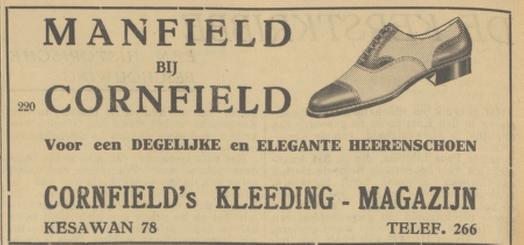
Cornfield Warehouse
Chartered Bank (now Bank Nasional Indonesia) and Chinese Bank (now Bank Danamon).
Hiu Ngi Fen’s Moon Pharmacy, later open in Jalan Bulan. https://cihc.nl/58-apotik-bulan/
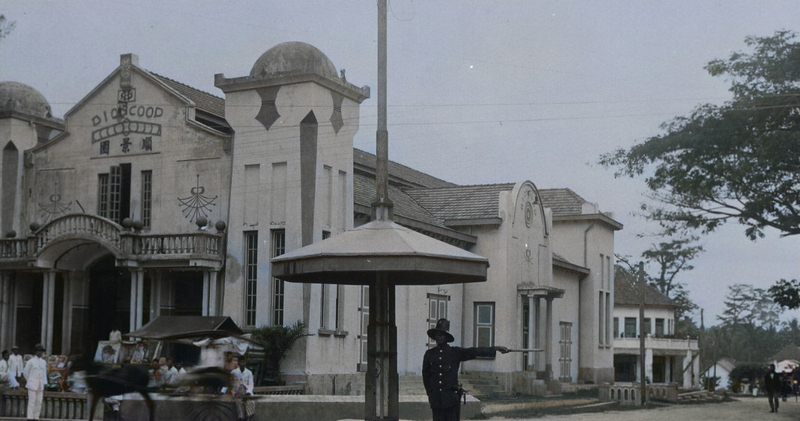
When it comes to the night view of Medan, people will definitely think of Canton Street (Jalan Surabaya). This street is very special. In the middle of the street, there are a number of kiosks built with wooden boards, starting from the junction of Canton Street and Kapitan Street and extending to the junction with Hakka Street, also called Djalan Law Ah-Yok. It is estimated to be about 500 meters long. Small vendors were doing business, selling a variety of small stuff, a dazzling array. When night falls, the entire street is brightly lit up, and there is an endless stream of customers who came. The shops on both sides of the street are also open and light up for business. The whole street is cut into two narrow streets by these kiosks, which can only be used as a single lane for a small passenger car to pass.
Zhang Rongxuan Street (Jalan Bogor), which intersects with Canton Street perpendicularly, is a “food street” with many restaurants and brilliant lights at night. There are three cinemas on Canton Street, they are Orion Bioscoop, Chenguang Bioscoop (Tjong Koeng Tat) and Capitol Bioscoop. Rio on Kapitan Street, Rex and Cathay Bioscoop are also not far from Canton Street. Deli Bioscoop. There is the Orange Bioscoop on the neighbouring Guandi Temple Street (Jalan Irian Barat). Oranje was one of the first one, built by a jew named Michael.

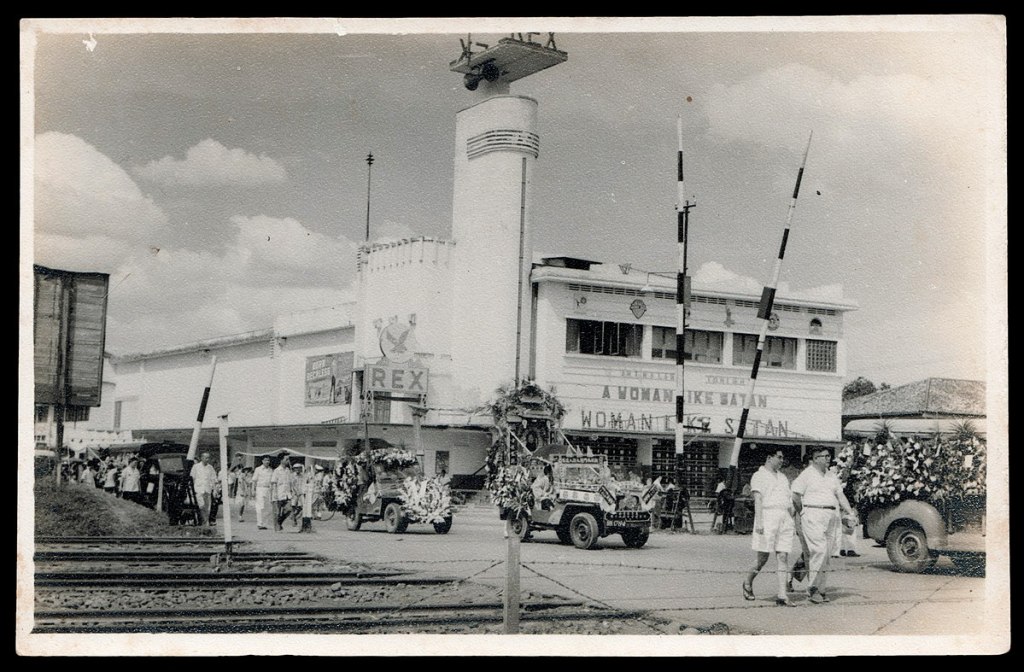
Those who watch movies in these movie theatres at night all like to come to Zhang Rongxuan Street for supper after the show. Some of our good classmates, if they don’t watch a movie in the evening, sometimes they will meet at the outdoor cafe next to the Cathay Cinema. The AA system is implemented, and they chat while drinking coffee. Only then went home separately. The night in Medan left me with many good memories.

The shops in Kesawan district specialize in high-end foreign goods. There is a candy stall called Toko De Zon store selling sweets made with roasted coffee beans. It is still unforgettable. When I think about it, I salivate but cannot see it again. In 1964, the Indonesian currency continued to depreciate, and it cost 30,000 to 40,000 yuan to buy a pack of Indonesian rice. Then one day at noon, the Sukarno government raided and ordered the Indonesian dollar figure to be chopped off the back 3 zeros. Ten thousand becomes 10 rupiah, and one thousand becomes 1 rupiah. The sudden news made people caught off guard. Someone went shopping immediately before receiving the news. They took advantage of the vacancy. I heard that Toko De Zon was crowded that day and grabbed the goods. Toko De Zon suffered a particularly large loss.
 Stories from Deli
Leave a comment