I will now tell you a little about the different names with Natives. So the most important thing is the lack of family name. Sometimes a family is determined part of the name carried by all, which is especially true Javanese goes easily. When then the father Wiriosastro called, the sons call themselves Wirioatmodjo, Wiriosentono, Wiriowikromo, Wiriosentiko and the like. But that’s an exception, which may well be under European influence.
So it is improper use of the margin name of the Bataks as a personal name. This margin name originated as follows. In the original small settlements, all inhabitants were considered as descendants of the founder of the village. So it is name of the tribal village and some names can still be used clearly heard, as, for example, in those where the word hoeta in occurrence, the Malay kota: Hoetabarat, Hoetapea i.e. village to the west, village in the swamp (paja). Or also loemban, hamlet
: Loembantobing, hamlet on the slope (tebing); Loembantor, hamlet on the mountain. Go live by the lake by one the Bataks still have the name of their tribal village retained, although the margas were often split, with new ones margas arise.
When the mission here made followers, the names became of the tribal villages used as family names, which is from Bataks opinion is incorrect, but the European example works infectious.
Mohammedaansche Bataks also do the same, except those who want to stick a little more to the old adat. After all, it is always a matter of fits and starts, letting go of established habits. Someone might by his nameplate at the door to indicate that he did not use the marga name more in the old way, but maybe he will not yet dare to marry a girl of the same name, although no one can trace whether she is related to him. Something is simply considered incestuous, but marrying a full cousin on mother’s side is very good. It’s precise as with the Chinese and it’s only been about ten years, that a marriage in Bandung of a couple of young Chinese has caused a storm of indignation with peers tribal name
light up.
Most people give a name to the child shortly after birth. Choosing that name is always a very important thing. This is the case with Bataks, for example adat, that someone of the family may give the name, but it seems that there is still some sort of judgment to be held on God
by counting, whether a handful of grains of rice an even or one contains an odd number of grains, to see if the choice is correct.
In true Native sense a name is more than simple a means to distinguish people from one another. Which is still possible with us, because we would not feel much for it the system of some futurists, which the people just like cars or American streets with a few letters and numbers would like to indicate. A Native sees something in a name, that is of importance to the forces of the unseen worlds. Therefore often a child who has been seriously ill given a new name and renamed on Java desas,
if there has been a crop failure a few times in a row. I do not know, or the popular statement, that bad spirits are a person or not knowing a village by its new name and therefore theirs giving up chase is enough. It seems to me that there are more of a mystical power in the name, which is also the reason will be that some Natives dislike it to be called their name. It is therefore considered very inappropriate considered asking someone for his name, however is sometimes necessary for government officials. The person concerned then answers: ‘I am called such and such’. Javanese and Malays do not have this objection, but Menangkabauers well, but because of the traffic with Europeans such a thing must conception wear down.
That first name, which is given shortly after birth with more or less ceremony, is called nama ketjil. That name will be later replaced by some others, but it is, again, by family members. There it becomes among others as highly inappropriate considered, to even mention the name of father or father-in-law. The Bataks therefore start naming after children take it one step further and change their name at the birth of first grandchild, boy or girl, and are called Ompoe ni Pontas, Grandma of Pontas or something like that. One can see from all this well, that the name is often changed among Natives, but then name in the sense of “to be called”. And actually said this is also the case with us. How often are children in their infancy youth not named after their first attempts at their own name
and for a while they even moved in to do so to keep a spit-sob sound at a later age. It was not so rare to see engagement announcements from Pip Die-en-die, phil. stud. and Kik Zoo-and-zoo, jur. cand. More general, however the habit of keeping the children like this, say on the H.B.S. age, no longer by the pet names, but their christening name to use, which they then keep for the rest of their life. If
so we get a civil status for Natives, they would are obliged to remember at birth which name it
child will wear later as an adult. Incidentally, there is actually no difference, because how your children become in their own environment leave the law cold. Only there are special cases,
in which name change also takes place with us, namely with the join a spiritual order, but then it becomes civil name not changed. But hajis will be different want to have. For that is the new name, the she in Mecca as rule in consultation with a guru, having chosen, as a species title, which they also officially bear today. The civil position for Natives would certainly take this into account must keep.
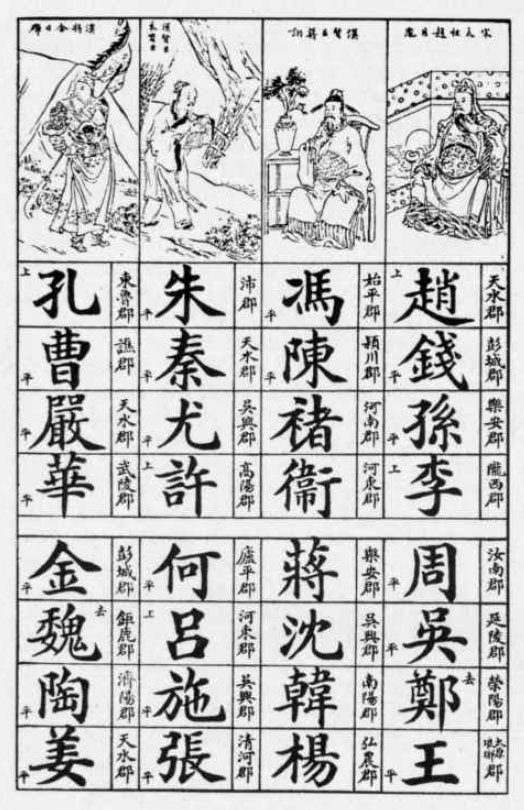
The giving of names is very developed among the Chinese, with the result that it is sometimes a difficulty for Europeans forms to make sense of it. The main thing must be that the The Chinese all use a tribal name, as with the Bataks de marga. Under European influence that is quite a family name but actually it is the name of the original tribe. Today it is still with more than half of the names to ascertain that they are derived from the name of a village or place to be. That is why people do not put the name in full in old documents, as we know it: Ong Boen Sie, but there is talk
Boen Sie of the tribe Ong. Chinese will always be such a person still call Boen Sie, but Europeans, who are used to someone by the family name, address him as Mr. Ong.
That tribal name is called “hsing”. There are of them has been a very large number, around 2000 (whereby one must remember that the numerous variations of the same name, such as originated by different spellings for us, impossible for Chinese are), but that number has shrunk to well over 450, all of which are monosyllabic except for a very small part.
Those tribes are given up in a Chinese booklet that was very popular and that exists in various editions and editions; it is called “The hundred tribes.” It used to have every schoolboy such a book that costs a few cents, as a reading book, but nowadays other schoolbooks are used, which are more unpleasant Western style to teach children the necessary wisdom.
Of such an old book, which is still here in the evening markets the Chineesche district is always in stock, our photo shows the first page again. About thirty-two large Chinese are seen there
characters, each of which indicates a “hsing”. With each of those names are in the same box in the corner a little sign, to indicate in which tone the word should be pronounced and next to it is stated from which district the tribe comes is and what the meaning is. At the top of the page are four people
depicted as the most famous representatives of this tribes indicated on the page, in this case all four great statesmen from ancient times.
There are several names on this page that appear here are well known. Thus it says, for example, in the third column from the right at the bottom of the tribe name of Tjong A Fie and in the second column from the right the second from above that of Tan Tang Ho. In the first column from the right is the third from above the hsing of pine President Soen Yat Sen and the second column from the right contains in the numbers one and five from above the tribal names of the from the
civil war known Fong Yoek Tjong and Tjiang Kai Sek.
It must be remembered that the pronunciation of these names is the different dialects are very different, so that it is almost impossible is to rely on the phonetic spelling to be able to judge
or two persons are from the same tribe. For example the name Tjong, known here, which is pronounced in Amoy as Thio and in Beijing as Tjang. It is therefore understandable that
the son of Tjong Yong Hian took up his position as consul of the Beijing government called Chang Pu Ching, while the in the past Thio Tiauw Siat also known here, who here another has left a great foundation, of the same tribe as Tjong A Fie. The various statements of the second from the left in the bottom row, for which one says Huy and the other Kho.
In addition, especially here in Deli is the use of one phonetic spelling both Dutch and English
example, so that, to name a case, Oops and Whee exactly must be pronounced equally.
People with the same hsing consider each other as relatives. There are associations, in which only persons with similar tribal names are included, often with intent to erect a temple for the worship of the common progenitor. It is also common to work as a staff only employing people with equal disposition and adoption of sons to obtain tribal continuation is also becoming a boy from the same tribe.
I may also add that this booklet with tribal names was used in a very typical lottery. Namely, there were cards sold, which are filled in by the seller the name of the one who is expected to do so in the following high state exam if number one will pass. It’s just like with children’s parties guess the name of a doll, but here it is the choice is limited to the names in the booklet. There is tampering
excluded, because the entrepreneur himself does not know who is the prettiest will turn out to be a candidate. It must be a very popular bet even here in India.
The personal name of a Chinese usually consists of two words. He wears several, not just one after the other, as with Natives, but at the same time. To begin with, one child a pet name, something like toot, doll, doll, brother and such, which, however, is not used any longer than until it goes to
school. Then he gets his realities for the rest of his life, name, being mentioned by family and friends. Of course are a lot of more or less mystical rules of which the following is a nice example.
As a rule, a father shall name all his sons the same two, usually the first, giving the same thing and then leaving the other names of successive brothers together form a spell.
It is a real Chinese hobby, such word games to make. I find this as an example. Am father with den
tribe name Tan gives all his sons the name Lay and chooses as a spell: literature can build life, “boen tjiong kho lip sin”. To be sons are now called successively: Tan Lay Boen, Tan Lay Tjiong, Tjan Lay Kho, Tan Lay Lip and Tan Lay Sin. I do not know what happens if the spell never comes off, or if there are still sons left.
Meanwhile, it is common in children of lesser age literary fathers, that the proper name consists of only one word, in that case becomes between the hsing and the own name for euphony. Besides this actual name, a developed Chinese still bear several names, including especially important name, which he adopts after the passing of one of the high state examinations and the name, die
he performs as a civil servant, but both are rare by nature in India. The also occurring so-called literary name, corresponds to a pseudonym with us.
Well is still typically Chinese giving a posthumous name, often for deserving men also a kind of title, which used to be was granted by the emperor. So be in history books the emperors themselves are always referred to by those posthumous names. All these names are mixed up for a non-Chinese one
source of confusion, but that it is being exploited to mess around is rare: even where people have only one have an official name, it is possible under a false name to live.
If we take another look at other townspeople, then we get we first the Arabs, whose names are usually long, but are relatively simple. Their names are structured as the Biblical Names: Sulayman bin Daud bin Nuch, or after ours utterance Solomon the son of David, the son of Noah. That
expression ‘son of’ should not be taken too literally, because it can also mean descendant of. As a rule
Arabs then for their name Sech, which is not a title, but simple sir, and after their name means their tribal name.So if a man is called Sech Umar bin Mohamad Balatief, is his own name Umar, his father’s name Mohamad and his tribal name Balative. With the addition of all kinds of indications before and after the name.
For-Indians has gone much further. So far they are not a Mohammedan, they put the designation of theirs caste after the name, that is, as a rule of the part of the caste to which they belong, originally corresponding with a particular profession. That is also done by others, like I will relate to the Sikhs who use the word Singh: lion hang behind the name. Someone who now has on his nameplate
stand Ponosamy Pillay, is called Ponosamy and is from the lower caste of Pillays. Thus Arumugam Chetty is a member of the lower caste of Chetties, however, nowadays prefer more polite form
Chettiyar.
But apart from this pursuit of special designations Indians also use many initials. They are not
indications of baptismal names, as would be the case with us, but abbreviations of father’s or grandfather’s name or of the village of descent. Now it happens, that it is Tamil, the language, which is in Madras is spoken, not written with letters, however with syllables, just like the Japanese katakana. They have so no letter r, but signs for the syllables ra, roe, rau etc. which signs are then called rana, roena, or rawana etc. Mohamedans also do this a lot and so it is seen Tokos include names like Ona Desan Sahib, Moena Bawadji Sahib, and the like Also the so-called brands of the Chetties, although these are nowadays use many Latin initials. So opposite the brand de Borsumy, where ARS is written in large letters. The man is called Ana Roena Sona Titani Chettiyar; so the first three words are initials, the fourth is his own name and the last his caste designation.
Although people do not know which caste that is or what it is initials mean, it is well understood that one is such a person should not mention Mr. Chettiyar or Mr. Ana.
The Sindhi, the so-called Bombayers, form den name something else. They choose a name from a Hindu deity or a mythological hero and hang one there exit behind, indicating their dedication to the godfather, mail or chand or das or rai or ram: Hoondamall, Kishandas, Bulchand, etc. The initial of the name then becomes the initial added from the father.
From Gerard Jansen, Andere Wereld
 Stories from Deli
Leave a comment