1,
According to Nanpu Xie’s Baoshutang genealogy, the Xie’s ancestors opened the base of Nanpu Village on Dongshan Island from Xinghua Mansion (now Putian City) in the late Ming and early Qing dynasties. Xie Liantang was the 14th ancestor. Nanpu Xie’s Hall is Baoshu Hall, and the ancestral hall has a couplet “Xinghua lives in a long distance, and Dongshan has a long world.” “Dongshan” refers to the place where Xie An, the prime minister of the Eastern Jin Dynasty, lived in seclusion. It is also the source of the idiom “Rising from the East”, indicating that its origin can be traced back to Xie An’s line. However, in the old Dongshan Island, the land was barren, and there was no food. Many years later, Xie Liantang wrote to his nephew from Nanyang, saying: “Grandchildren should go abroad when they grow up, so they have the hope of a day out.”
Xie Liantang was born in Nanpu Village on Dongshan Island in December 1888. He was a posthumous son who came to this world seven months after his father died. There are five older brothers and two older sisters. Because he ranks sixth, the juniors are honored as Liu Shugong. When he was born, his second brother had already worked in Singapore, and later went to Minli City on Sumatra to start a small business.
Xie Liantang’s father was a farmer and ran a peanut oil extraction workshop, but the operation failed and the workshop closed down. Due to debts, the farmland was taken over by the creditor, and the fertilizer for farming had to be borrowed separately. For the annual grain harvest, the mother first dried it, and then repaid the debts of the debtor and fertilizer, with little left. Only sweet potatoes are usually eaten, and rice grains can only be seen on festivals. The mother sighed with tears and said, if there were two hundred yuan, and there was no need to borrow fertilizer money, it would not be there. This scene left a lifelong impression on the young Xie Liantang, thinking that he must earn two hundred yuan when he grows up to share the worries for his mother.
Life was too hard for him, and his mother was going to sell him to someone as an adopted child. After learning the news, the second brother wrote a letter and resolutely opposed, and sent money to help the family. The mother later said, “If it weren’t for the power of Brother Erzhong, and you don’t know where to go today, how can you still share Si Xinxi with your mother?”
When Xie Liantang reached the age of studying, his second brother wrote a letter urging him to study hard before he could find a way out in the future. It was the second brother’s insistence that he had the opportunity to study. He recalled in his later years: “It was the kindness that Gu Yu had to Brother Xianzhong. It was deeply imprinted in his mind. There is no day to forget it, and there is no day to hope to learn something, in order to report it in case.” Since sensible, the family has always been Being in a state of poverty, his mother became ill from overwork and died when Xie Liantang was 16 years old.
2,
In 1906, Xie Liantang was 18 years old and left his hometown to find his second brother in Indonesia. He took a fourteen-hour sailing ship to Shantou, then took a British freighter, and arrived in Singapore seven days and nights. After a short stop, I came to my second brother’s house in Minli City, northern Sumatra, Indonesia. The second brother introduced him to work and earns 8 yuan a month. Soon, the second brother ran a small shop, and he went back to the shop to help. In 1911, Xie Liantang was 23 years old. Unfortunately, his second brother died of illness, leaving a wife and five children. The oldest one was 12 years old and the young one was only five years old. Before his death, the second brother explained that he would spend three to five hundred yuan for his family’s handiwork, make cakes, sell them to children, and make money. Xie Liantang remembered the kindness of his second brother, and resolutely assumed the responsibility of raising his nephew and niece.
Xie Liantang tried his best to urge his nephew to study. In his free time, he went to the school to learn about his nephew’s study, and gradually became familiar with the teachers and school directors. The directors told him that part of the school funds had been embezzled by local evil forces and refused to return it. Everyone took care of their personal safety and did not dare to fight against evil forces, which prevented the school from further development. Xie Liantang was very angry after hearing this, and he was upset.
Xie Liantang later recalled: “When I heard about this situation, I felt enthusiastic and red-faced. Gainan had lived in the countryside for a few years and had been doing business without knowing his personal interests, such as a newborn calf and not fearing a tiger. So I discussed this. , That is, speak righteously, and should strive hard to facilitate school affairs.” Because of this, in the next board of directors re-election, he was unexpectedly elected chairman.
Xie Liantang failed to negotiate with the evil forces several times. He resolutely resorted to the law and took the evil forces to court. Fortunately, the authorities defended justice, won the lawsuit, and recovered the public funds. Under the leadership of Xie Liantang, after two years of development, the school expanded its scale and built a new school building. This is a crucial step in Xie Liantang’s life. Everyone admires his insight and ability, and his prestige in the overseas Chinese community has greatly improved.
When Xie Liantang was 24 years old, his friend enthusiastically introduced the marriage. However, “because of thinking about completing the unfinished work of brother Xianzhong to raise his children,” he declined his friend’s kindness. A few years later, he sent his nephew back to Nanjing for further study, where he studied at the business school. After graduation, your nieces also grew up. He helped his nephews and nieces to complete the marriage and marriage. “The responsibility of reporting to the brothers finally came to an end. It was relieved and comforted.” To repay the second brother’s kindness. He didn’t get married until he was 33.
In 1915, Japan invaded Shandong and proposed to the Beiyang government the “21 Articles” to destroy China. The news came and caused public outrage in the overseas Chinese community in Southeast Asia. The overseas Chinese have boycotted Japanese products, advocated domestic products, and put forward proposals for taking back the rights of Shandong. Xie Liantang and several overseas Chinese leaders in Minli City were impassioned and full of patriotic enthusiasm. They decided to establish Qiaoxing National Products Co., Ltd. and publicly promoted Xie Liantang as the person in charge. It is hoped that through the sale of domestic products, profits can be obtained and the goal of boycotting Japanese products can be achieved. Xie Liantang encountered a problem immediately after taking office. Due to the small number of domestic products and the large fluctuations in international exchange rates, the goods often arrive at the port, and the cost has been reduced. After several twists and turns, business has picked up. Since then, the company’s performance has improved year by year and its business has continued to expand. In 1922, the company headquarters moved from Min Lai City to Medan City, the capital of Sioux Island. Later, the business further expanded to Penang and Singapore.
3.
Medan City is the largest city on the Indonesian island of Sumatra, with a large population and a prosperous business. When Chinese go abroad, they live in groups of regions and clans, forming gangs marked by regions or ethnic groups. At that time, the major gangs in the overseas Chinese community in Medan set up their own primary schools, with a total of six. These schools have encountered difficulties in financing, uneven schooling systems, and independent administration. In addition, overseas Chinese engaged in commerce, mostly selling wholesale commodities to British and Dutch importers, and they competed with each other at low prices, their operations were bleak, and profits were meagre.
Xie Liantang is determined to change this situation. He takes care of the company’s business in the morning and spends his time in social welfare undertakings in the afternoon. He visited the board of directors of six schools and persuaded everyone to merge together and set up a unified organization to coordinate school funding and unify teaching management. His proposal was approved by everyone. In November 1928, the Medan Overseas Chinese Education Association was established, which is the unified leadership of the Medan Chinese School. Mr. Zhang Nianyi, who is highly respected in the overseas Chinese community, is hired as the first chairman, and Xie Liantang is the second chairman. The Overseas Chinese Education Association formulates the Constitution of the Association, the Organizational Regulations of the Principal Meeting, the Regulations on Staff Service, and the Regulations of the Education Research Association. In this way, the management and teaching quality of the six overseas Chinese schools have been greatly improved.
On the other hand, in order to change the status quo of Chinese businessmen doing their own business and vicious competition, Xie Liantang worked tirelessly to persuade the Chinese businessmen to unite and establish a unified coordination agency. Under the propaganda and organization of Xie Liantang, in the spring of 1930, the Sudao Chinese Merchants Sugar and Rice Grocery Association was established. Xie Liantang was elected as the president and served three consecutive terms.
On behalf of all Chinese businessmen, he negotiated with British and Dutch importers, unified price increases, implemented rebates for goods, and handed over the rebates to the Suzhou Chinese Merchants Sugar Rice Grocery Association for management for education and charity. British and American businessmen also saw the disadvantages of vicious competition and readily agreed. In this way, more than 200,000 dongs can be earned in rebates each year, and 50,000 to 60,000 dongs can be obtained for public donations. Xie Liantang used the money to purchase real estate and used it as the clubhouse of the Sudao Chinese Merchants Sugar Rice Grocery Association and the Sudong Chinese Chamber of Commerce. Later, the seventh and eighth primary schools were added.
The elementary education was solved, and new problems appeared. After these primary school students graduate, there is no school to go to. Faced with the status quo, Xie Liantang and overseas Chinese leaders began to prepare for the construction of Sudong Middle School. He bought 2 acres of land on Yue Street as the school buildings of Sudong Middle School and affiliated elementary school, and bought 3 acres of land as the school playground. In 1931, the school building was completed and Sudong Middle School was established. Because it was founded by the original team, the board of directors of the Overseas Chinese Education Association was restructured into the board of Sudong Middle School. From the third session in 1933 to 1936, Xie Liantang served as the chairman of the board of Sudong Middle School for four consecutive circles, becoming the most influential overseas Chinese in the local area. One of the leaders.
Sudong Middle School adopts “propriety, justice, integrity and shame” as its school motto, which encourages Chinese students to remember that their ancestors came from a state of etiquette with a cultural history of five thousand years. The school has formulated strict teaching rules and regulations and hired experts and scholars with a lot of money. Many outstanding teachers come from world-renowned universities, such as Harvard University in the United States, Waseda University in Japan, Yenching University in Beijing, and National Central University in China. The school has cultivated many outstanding talents for the local business community and has become a famous Chinese middle school in Southeast Asia.
In order to commend Xie Liantang’s outstanding contributions to the business and education circles, the Suzhou Chinese Merchants Sugar and Rice Grocery Association specially set up “Chairman Xie Liantang’s Record of Merit” with the following inscription:
The ability of society to evolve incessantly depends on the strongest figures in society to promote it. Looking back on a few years ago, the Chinese businessmen in Sudao lacked leaders, and they were struggling to advance their careers, and the spirit of the same industry spread. There are ways to harm others, but nothing to benefit oneself. It affects the business prospects, Hu Kan imagined, if there are no special liaison agencies, why can we save this decadent old habits. With this in mind, Chairman Xie, Mr. Liantang, eagerly took advantage of the competition between Hengfeng and Capricorn, and advocated the formation of this association in order to seek a place where the overseas Chinese can effectively communicate with each other and seek common welfare. Climbing up and calling out, the distance responds. Hosted for three years and achieved remarkable results. Such as subsidizing education funds, building clubs and donating to the China Business Office for charitable deeds, painting Zhou Xiang, and working hard. Apart from admiring the fellow members of this association, Mr. Yan Jiang’s great accomplishments are invaluable, and he expresses his enthusiasm and encourages him.
Sudao Chinese Merchants Sugar Rice Grocery Association
December 15th, the 23rd year of the Republic of China

4.
Xie Liantang is upright and honest, and is good at coordinating the interests of all parties. Not only the overseas Chinese respect him, but foreign companies such as Britain and the Netherlands also respect him. In 1935, KPM Shipping Company specially presented six first-class tickets back to China, and Xie Liantang was invited to return to China for inspection. Xie Liantang and his wife took a boat to Hong Kong. Due to the unsettled journey, they could not return to their hometown and provincial relatives. They took a boat directly from Hong Kong to Shanghai, and then transferred to Nanjing to reach Peiping by train. After the inspection, I returned to Shanghai to worship the Buddha at Mount Putuo. After the wish that Mrs. Que had been admired for many years, I went to Suzhou to meet Master Yinguang and listen to the interpretation of the scriptures by Master. Then go to Hangzhou Lingyin Temple to visit the famous scenic spots in Sanzhu. After returning to Indonesia, he began to recite Buddhist scriptures, fasted a vegetarian diet, and became a Buddhist layman.

After the outbreak of the Anti-Japanese War, Xie Liantang took the opportunity and realized the intention of Japan to invade southward, and purchased dozens of acres of coconut groves in Penang, Malaysia, as a land for retreat. After the outbreak of the Pacific War, Japan occupied all parts of Southeast Asia, and all overseas Chinese affairs were terminated. Xie Liantang and his family moved to the depths of the coconut grove in Penang, where they cultivated for themselves. He has tea and light meals, and does not eat after lunch, and his days are below average. The surplus from farming, regardless of race, is all provided to the surrounding poor families.
During his days in Penang, he worked in the countryside every day. Once, he sent back a photo to relatives in his hometown. In the depths of the garden, he was thin and thin, holding a hoe in his hand, looking tiredly into the distance, which was a photo of his spare time. The photo has a profound meaning. He is telling his younger generations to love labor, and the gains from labor are precious, and every dollar is hard-won.

After Japan surrendered in 1945, Xie Liantang returned to settle in Medan, Indonesia. By the 1950s, the original educational scale of Medan could not keep up with the social and economic development. Xie Liantang cooperated with a group of overseas Chinese leaders to establish the Chongwen Middle School Foundation and the Chongwen Middle School, which opened in August 1955. This secondary school only existed for 10 years and was closed due to the intervention of the Indonesian government. However, it has cultivated a large number of talents with modern scientific knowledge and Chinese cultural education, which has a far-reaching impact.
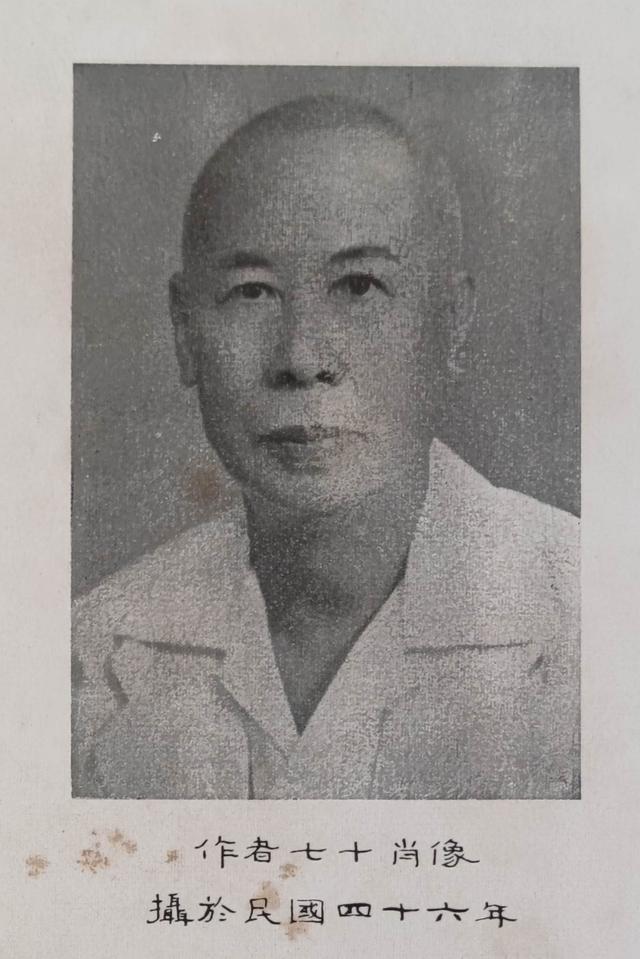
In 1957, Xie Liantang wrote a review of his life in the Seventy Self-reports. He modestly said: “The whole life’s knowledge is only equal to the elementary school. In the beginning, he only volunteered for two hundred golds to show that he did not forget his mother’s training. There will be so many jobs in the future, although they have not achieved success, but fortunately they have not passed away. Every quiet night thinks about it, and it is not clear why the social environment was simple decades ago, and because of the current situation, there is an opportunity to intervene in social work. As a result, this is why Yu is still obsessed with the affection and meaning of brother Xianzhong.” The quotations in this article, without indicating the source, are all quoted from “Seventy Self-reports”.

5.
In the early 1960s, the anti-Chinese situation in Indonesia became increasingly severe, the Chinese economy was severely hit, and many Chinese schools were closed. At this time, Xie Liantang was over 70 years old and was forced to move to Penang again.
In Penang, Xie Liantang still paid close attention to social affairs in his later years. He found that there were many poor and lonely elderly people in the society and the evening scene was bleak. I also see that many young people do not study well, and go on a crooked road of no return. This situation is worrisome. He put on reading glasses and wrote a proposal for “Penang Community United Unity”. He criticized the community’s inaction:
“The heart of compassion is common to everyone, and there is always the desire to improve. This is a big matter, and it is not a contribution to all human resources. Most of the existing clubs in Penang still stayed decades ago. Improving, and becoming more and more hollow, not only does not carry forward the original spirit of mutual assistance, but also shrinks day by day. Pay attention to the icing on the cake and glorify the lintel, forget about the cold and send charcoal to the lonely old.”
He proposed measures for association of associations:
“First, form a sorority association of directors-generals of the societies. If it is effective, then organize a federation of societies. Second, form a preparatory office to liaise and issue declarations, solicit the participation of all societies, and get the approval of a number of societies. , Each group serves as the presidium once a year. The third is to convene a meeting once a month to solicit public opinions and brainstorm for the benefit of the conference.”
He also proposed the establishment of a fund to serve the society, namely “raising a pension fund for the orphans, a student aid fund for poor children, a fund for people with chronic diseases going abroad for medical treatment, and a fund for the poor during the Lunar New Year”.
Xie Liantang hopes to replicate the successful experience in Medan City and organize the main Chinese associations in Penang, such as Pingzhang Hall, Chinese Chamber of Commerce, Kwong Fook Palace, Nanhua Hospital, etc., into a unified Penang Association of Associations, working together and coordinating Manage and serve the society. However, after World War II, many countries in Southeast Asia became independent, and the government’s function of serving the society became more and more perfect. Social phenomena such as birth, old age, sickness and death were all managed by corresponding functional departments. The social management role of associations is weakening, giving way to relevant government departments.
Xie Liantang’s ideas have been widely discussed in the overseas Chinese community. His spirit of seeking the well-being of the common people, the development of the community, and the harmony of the society is admirable. He is old and still full of energy, walks vigorously, and offers advice and suggestions for charity. In the spring of 1974, accompanied by his son, he went to Singapore to visit an old friend who was sick. Unexpectedly, after returning, he died on June 10 due to a slight illness at the age of 86.
Xie Liantang had two marriages in his life. His wife, Chen Zhisheng, was born in 1895 and died in 1944. His successor Zhu Qinglan was born in 1916 and died in 1965. He has six boys and five girls, the eldest son Da Zhou, lives in Singapore. The second son, Dayang, lives in Singapore. The third son Daming lives in Sydney. The fourth son, Dajian, lives in Melbourne. The fifth son Daheng lives in Melbourne. Six son Dachuan, also in Australia. There are five daughters, the eldest daughter Dawan, the second daughter Darong, the third daughter Dahui, the fourth daughter Dafang, and the fifth daughter Dayan. His children and grandchildren are all well educated, successful in career, and spread all over the world.
6.
Xie Liantang is not a big business man. He spent a lot of time and energy in his life serving the society regardless of remuneration. He said: “I look back at one job, six out of ten in businessmen and four out of ten in society. Only one half of the ideal can be so sparse and superficial.” In addition, he has many donations, among which Buddhist donations are not well known.
In 1931, the Jianghuai flood disaster, the news spread to Nanyang, the Soviet Union Chinese Chamber of Commerce, headed by Xie Liantang and other overseas leaders, called on the overseas Chinese to provide relief for the country, including Xie Liantang donated two hundred taels of silver.
In 1931, he donated 15,000 yuan to establish Nanxun Primary School in his hometown of Nanpu Village, building a total of 431 square meters of school buildings, and donated 3,000 yuan as the school’s education fund. Since then, he has provided funding for Nanxun Elementary School every year, increasing construction funds year by year, and improving school equipment. He also formulated the school motto of “being clear about courtesy and righteousness, knowing integrity, being responsible, and observing discipline” for the school. Nanxun Elementary School is the first overseas Chinese-run school in Dongshan County. It has complete facilities and children from nearby villages also come to school.
When the Anti-Japanese War broke out in 1937 and the national disaster was at stake, Xie Liantang launched overseas Chinese donations and donations. Every quarter, the funds raised will be remitted back to the motherland through the Medan branch of the Bank of China to help the wounded and refugees. By the fall of Nanyang in 1942, they have successively raised more than 100,000 yuan to support the motherland. He also sent volunteer drivers back to China via Yangon twice to participate in military transport on the Myanmar-Burma road.
He paid attention to the War of Resistance in his hometown. In 1942, he donated money to participate in the activities of donating the “Dongshan” aircraft to fight against Japan. Together with many patriotic overseas Chinese, donated money to build “Dongshan County Anti-Japanese Martyrs Cemetery” and other activities. He is concerned about the industrial construction of his hometown. In the 1950s, he successively donated funds to build Dongshan Overseas Chinese Power Plant and Overseas Chinese Flour Factory. Beginning in 1950, until his death, for 24 consecutive years, every Spring Festival, remittances were given to the elderly over 60 years old in Nanpu Village, which was called the living allowance.
After the founding of New China in 1949, the remittance of overseas Chinese was interrupted, and Nanxun Primary School was taken over by the people’s government. After the remittance was restored, Xie Liantang continued to support him. He continued to remit money to help Nanxun Primary School build more classrooms, purchase equipment, subsidize teachers, and reward students for further studies. In 1965, Xie Liantang sent special funds to repair the campus and built two additional classrooms. In 1974, Xie Liantang donated an inheritance of RMB 100,000 to Nanxun Primary School in his will to build a new school building. The donation was brought back by his descendants after his death. The school used this money to build a three-story teaching building with twelve classrooms, with a construction area of 596 square meters. In its heyday, Nanxun Elementary School developed into seven classes with more than 180 students, and all school-age children in the village were enrolled in school.
Xie Liantang said: “We are in the world, and whenever our career is beneficial to the people, we don’t have to weigh the pros and cons. You just need to be conscious and direct, and you will have brilliant results.” He is a man of noble character, who has worked hard and thrifty throughout his life, doing good for the world, setting up education, and spreading China. civilization. In the overseas Chinese community in Nanyang, he is known as a social welfare enthusiast and a charitable elderly man. Many years after his death, his deeds of good deeds are often mentioned. The Indonesian Business Daily and the International Daily have published articles in memory of him. In his hometown of Dongshan County, scholars wrote articles to commemorate him and promote his deeds. His former residence is being restored, and Xie Liantang Memorial Hall is planned to be set up for future generations to pay respect.
 Stories from Deli
Leave a comment