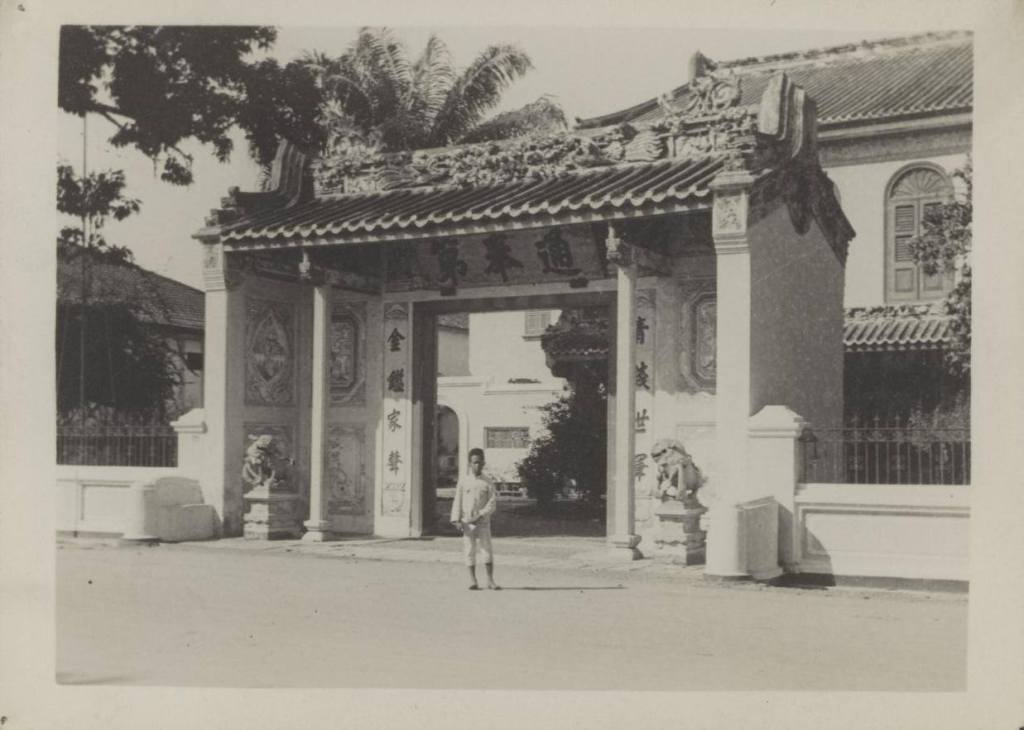
On December 26, 1900, at 11 p.m., the Chinese Captain of Medan moved into his new house. This festive event was celebrated for days in advance, with a wayang (shadow puppet show) being performed in a roughly built shed in the forecourt, which was transformed into an idyllic backdrop with glittering decorations and phrases. Dressed in elaborate costumes adorned with gold thread and sequins, pseudo-mandarins reenacted heroic tales. The audience gathered around, constantly changing, and on the 27th, corporate groups arrived and were received in the new house with grand ceremony and formality.
The house itself is a masterpiece, exuding simplicity, symmetry, and practicality. The front yard is lined with the main road, Kesawan, and features a “grand gate” of wood and stone, crowned impressively. Through this gate, visitors enter a quiet forecourt and approach the main building, square and primarily tinted in a light coffee-cream color, topped with a traditional Chinese roof with large, calm lines and tasteful cement decorations that aren’t overbearing. The sidewalls are elegant in plain white, with rectangular lattice windows made of openworked green tiles, adding a unique decorative touch to the otherwise large, quiet surface.
Upon entering, one passes through a wide central gallery, reaching a triptych-style portico, spacious and open, decorated with red and gold wood carvings partially imported from China. This leads into an inner courtyard, where a fountain will later be installed to bring freshness. The entrance area is roomy and bright, with small, pot-grown bonsai trees in the courtyard, showcasing the art of tree trimming. High above, glistening plaques display proverbs in faded letters that exude wisdom and, at night, glow with electric light, casting a soft glow over the entire building.
Through another courtyard decorated with red silk drapery, we enter the tepekong, the house temple, a spacious hall adorned with inscriptions, silk drapes, and wall hangings. Ebony chairs line the walls, and on the back wall sits a black and red wooden altar, where the household gods will be placed. The altar’s niches are framed with gilded carvings that harmonize with the solemn surfaces. The ebony furniture, including stools, tables, and stands, is inlaid with mother-of-pearl.
In one corner, we find a small Chinese cabinet with mirrors, a design originally adopted by the Chinese from the Dutch, similar to the 300-year-old standing clock that resembles the Frisian Ratsma clock. On a few tables sit carved panels with rooster motifs. The seats are covered with red silk embroidered in gold, and the walls feature large red silk cloths with sacred images. On the frieze, gilded proverbs shine. A few European pieces of furniture are used temporarily but will soon be replaced.
Moving to the back, a wide central door leads into an expansive inner gallery that spans the building’s entire width. All the stone surfaces in this colossal structure (nearly everything is stone) are covered in stucco painted in soft modern colors and English-style wall decorations. The gallery’s ceiling is divided into eight large panels, painted in shades of pink, light blue, and cream.
Next to the tepekong are two large rooms, one used as a waiting room. The entire complex has a symmetrical layout, with open, paved areas and covered galleries connecting the two annexes. These open courtyards are tastefully adorned with bonsai trees and proverb plaques.
We ascend the stairs, decorated with modern poppy motifs, into a spacious upper hall. Here, European-style furniture is in place temporarily, which unfortunately clashes with the rest of the decor. An Arabesque buffet stands out on its own, but on a side table sits something quite rare, a so-called njoe, a three-curved, intricate object adorned with soapstone facets, representing prosperity and wealth.
Upstairs, there is a second altar, named Kwanti, where a large piece of red silk is embroidered with a whole story. The red color spectrum of the proverbs on the opposite wall is beautiful.
Following the shiny lacquered hallways, with simple brown floor paint, we view the cozy interior of side galleries with charming pots of flowers and shrubs. The annexes feature a row of rooms for Chinese guests and a set of restrooms for European women. Downstairs, smaller rooms are arranged for hospitality, including a large ebony couch for prominent Chinese guests, complete with a tea and smoking table in the middle.
Finally, we leave this beautiful, simple house with its serene richness through one of the side corridors, passing bonsai trees shaped like pagodas, keys, fish, and more. Outside, the wayang plays on, and the warmth of the air is more noticeable as we step out from this cool, quiet palace back onto the warm Kesawan road.
The Procession
The followers of Tjong A Fie spared no expense, bringing him a grand ovation today. Banners with gold lettering on a red background stand like guards at the entrance, and the grand procession winds through the Chinese quarters, attracting much attention. The Hokkians lead, carrying massive yellow flags and broad pahongs embroidered with gold, followed by the Kwantongs with enchanting glass and flower-decked triumphal chariots, children enthroned in splendid costumes among flowers on tall stems. Amid the constant clang of cymbals, the Hweicho’s or Kehs arrive, represented by brightly colored guards and palanquins, with delicate doll-like girls floating above, their porcelain heads shaded by high-waving parasols.
Then come mandarins on horseback and anonymous flag bearers with tinkling flute sounds and beating gongs. The Teotjoe Kongsi men stride by in a dreamy display of purple and green. A cart filled with lilac-clad women making music is followed by blue-robed men with red sashes, and the Hailams approach, carrying a magnificent purple and green banner, a riot of colors like a Verster floral spectacle.
Boom, boom, clang, clang! drums pound, and the Go Koang men glide past in palanquins, their delicate faces framed by halos of color, pheasant feathers waving atop their flower-decorated heads.
Then follow palanquins with high-ranking tandils, and as the street’s excitement fades, the beautiful dream ends, and the daily hustle of this Eastern land resumes.
Deli Courant 27-12-1900
 Stories from Deli
Leave a comment