Teacher Zhang Liukun, the author of an article, vividly introduces the conditions of the overseas Chinese society in Indonesia in the 1950s and 1960s, and analyzes the reasons for the exclusion of Chinese in power in Indonesia. The author Zhang Liukun, a returned overseas Chinese from Aceh, returned to China in August 1960. He was placed in the Hainan Xinglong Overseas Chinese Farm and worked as a teacher and office director.
Indonesia’s independence from 1945 until the mid-1950s, the relationship between Indonesia and China has been relatively good. Over the past ten years, Indonesian overseas Chinese have generally been able to live and work in peace and contentment.
After the establishment of diplomatic relations between Indonesia and China in April 1950, the political orientation of the overseas Chinese in Indonesia was immediately clear. Most overseas Chinese support the People’s Republic of China under the leadership of the Communist Party of China.A small group of overseas Chinese continued their position before the founding of New China and continued to support the Kuomintang.
Therefore, the overseas Chinese society in Indonesia is divided into two factions, the red faction and the blue faction (playing each other as red butt and blue butt).The two factions each run clubs, schools and newspapers. The Overseas Chinese Association, the Chinese Association, the Overseas Chinese Chamber of Commerce, or fellow villagers’ associations, and sororities have been established in various places in Indonesia.
According to statistics, as of 1957, a total of 1,669 overseas Chinese schools had been opened in Indonesia, with 450,000 students (650 overseas Chinese schools survived after Indonesia implemented the Regulations on the Supervision of Foreigners Education in 1957).
The most famous Chinese newspapers and periodicals in Indonesia include Jakarta’s New Newspaper, Life Daily, Tiansheng Times, Awakening Weekly, etc.; Surabaya’s Overseas Chinese News, Takung Commercial Daily, New Life, etc.; Medan’s Democracy Daily, Sumatra People’s Daily, Sumatra Times, etc. New China News, etc. Indonesia and China have close high-level exchanges. In April 1955, Premier Zhou Enlai went to Indonesia to attend the Bandung Asian-African Conference. Just one month after that, Indonesian Prime Minister Sastro Amijoyo visited China. In September 1956, Indonesian President Sukarno visited Beijing.
At that time, the overseas Chinese society in Indonesia presented a peaceful event. Although the political stances of overseas Chinese are divided into “red” and “blue”, they generally “do not offend river water”. They do their own things, do their own businesses, and live comfortably.
Overseas Chinese small businessmen and hawkers have their footprints throughout Indonesia’s urban and rural areas. Villages and towns as small as one street often have one or two overseas Chinese shops. They have a harmonious relationship with Indonesians and their business is booming.
They would rather open a store in a remote town, because there are few competitors and business is easy to do. In a small place, just open an “Along” store (grocery store). It is well managed, thrifty and thrifty. It is not a problem for a family of seven or eight people to lead a comfortable life. It can also be used for children to study, graduate from elementary school or high school, and even send them back to China to continue their studies.
At that time, I was studying in Medan and I felt that Medan was like a certain city in China, with a strong Chinese flavor and full of Chinese culture. Many streets are named in Chinese, such as Beijing Street, Shanghai Street, Nanjing Street, Guangdong Street, Fujian Street, Sun Yisheng Street, Guandi Temple Street,… Most of the more than a dozen movie theaters also take Chinese names, such as Dahua, Cathay, EMI, Thaita, Chenguang, etc. Walking in the streets of Medan, the Chinese signs are impressive.

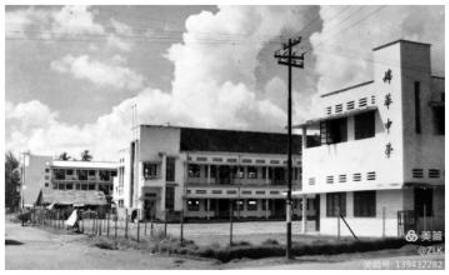
The neon lights of Chinese signs and advertisements are colorful at night. Schools run by overseas Chinese have prominently marked the school names in Chinese characters on prominent buildings, such as Mianhua Middle School, Chongwen Middle School, Sudong Middle School, …. Some clubs also organize lion dance teams, basketball teams, and troupes. The more famous teams are the “Great Wall Basketball Team” and the “White Light Basketball Team”. Most of the themes of the “New China Theatre Arts Society” and “Kunlun Opera Troupe” are related to New China. In 1958 , the large-scale drama “The Temple of the Five Ancestors” performed by the Progressive Troupe of Overseas Chinese in Medan caused a sensation in the local overseas Chinese community.
“The Temple of the Five Ancestors” is a play by the modern writer Ba Ren (Wang Renshu), based on local real people. The content was that five local young Chinese workers could not stand the bullying of the Dutch colonists. For the dignity of many Chinese workers, they joined forces to kill the foremen who oppressed them. In the end, five Chinese workers were killed by Dutch colonists, and the average age of the five was only 17 . To commemorate the five Chinese workers, local overseas Chinese built a temple in Medan, named Wuzu Temple. The five people are regarded as gods and worshipped for generations.
The Medan Progressive Troupe also performed “Thunderstorm” by Chinese dramatist Cao Yu. I was fortunate enough to watch the above two dramas and was amazed. All Indonesian Progressive Chinese Schools aim to cultivate students’ patriotic (Chinese) and (Chinese) nationalist spirit. Therefore, the curriculum, the adoption of textbooks and teaching content in most schools are “sinicized” and “politicized”, especially in the teaching of Chinese, history, and geography. Even some school principals and some teachers came from China.
From 1950 to 1958 , the power of the Red Overseas Chinese in Indonesia, who was concerned about the new China, greatly exceeded the power of the blue overseas Chinese who were pro-KMT. Every 1st October, China National Day, or 17 August Indonesia’s National Day, every household overseas progress, consciously raising the Chinese flag and Indonesian national flag, flag, red white flag fluttering in the streets, the scene is spectacular. Students from the Progressive Overseas Chinese School in the big city also carried the national flags of China, India and marched in the streets to celebrate. On the walls of the auditorium of each school, huge photographs of President Sukarno and Chairman Mao Zedong, as well as the national flags of the two countries are hung magnificently.
Various progressive schools sang Chinese progressive songs, such as “Volunteer March”, “Chinese People’s Liberation Army Army Song”, “Singing the Motherland”, “My Motherland”, “Ode to Yan’an” and “Unity is Strength”. The cinema screened a large number of New China films, such as “Plain Guerrillas”, “Dong Cunrui”, “Southern Expedition and Northern War”, “Women’s Basketball No. 5”, “Story of Liubao” and “Blessing”, etc. 20 or 30 domestically produced film. Many schools also book rooms (cinemas) to organize students to watch Chinese films. When I was showing “Shang Ganyu”, the Mianhua Middle School where I belonged booked a few Dahua Cinemas near the school to organize students from all classes to watch it.
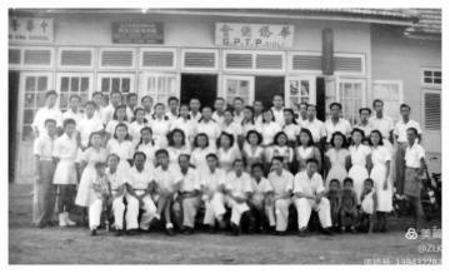
After the founding of the People’s Republic of China, a large number of patriotic overseas Chinese students returned to the country to study in Indonesia every year. Every June and July , the harbours in Jakarta, Surabaya, Semarang, Medan and other places are crowded with students and relatives who are going north, and it has become an unprecedented patriotic grand gathering for overseas Chinese in Indonesia. Most of these students are graduating from high school and preparing to go back to China to study at university, because there is no Chinese university in Indonesia. Some are elementary and junior high school students, inspired by patriotic enthusiasm, also decided to return to China to continue their studies. This wave of returning to China affects thousands of families, and their children’s willingness to return to China for further education has been supported by many families. These students buy boat tickets at their own expense, leave their parents and relatives, give up possible wealth, and vowed to return to the country and build the motherland after they finish their studies. According to statistics, from 1950 to 1958 , more than 50,000 overseas Chinese returned to China for further studies.

In 1958 , an incident occurred in Indonesia that almost collapsed the Blue faction. That year, the Taiwan authorities were involved in a rebellion planned by the United States in an attempt to overthrow the Indonesian government and provided logistics materials for the rebels. After the rebels were suppressed, the Indonesian government carried out a large-scale purge of the pro-KMT overseas Chinese forces. To arrest representatives of the Kuomintang overseas Chinese, close the Kuomintang party headquarters in Indonesia, close pro-KMT overseas Chinese schools and overseas Chinese associations, exercise personal control over pro-KMT overseas Chinese, and confiscate their corporate assets. This fierce attack caused the pro-KMT overseas Chinese forces to decline sharply. In 1958 , there were about 200 pro-KMT overseas Chinese schools closed in Indonesia , and many students had to transfer to progressive schools. The Mianhua Middle School where I was studying at that time experienced a surge in student numbers. The classrooms were not enough, so the ground floor dormitory of the three-story student dormitory was changed to classrooms, and the boarding students were adjusted to the second and third floors.
However, in the second half of 1959 , the great time of the Indonesian Red Sect overseas Chinese came to an abrupt end. Since then, Indonesia’s anti-Chinese anti-Chinese activities have been out of control. Sukarno’s administration has turned from left to right, with its complicated social background. From the historical point of view, the Indonesian Chinese were not born with any grudges against the indigenous Indonesians.
Before Indonesia’s independence in 1945 , the Dutch ruled Indonesia for 365 years. During this period, the colonists deliberately provoke the contradictions between the aborigines and overseas Chinese. The practice of “divide and conquer”, for example, allows the indigenous and overseas Chinese to live separately, deliberately highlighting the superior living conditions of overseas Chinese, and also separate by car and boat. Dutch colonists also granted overseas Chinese the privileges of operating wineries, opium houses, pawn shops, and selling salt.
As a result, the overseas Chinese became “exploitors” in the eyes of the indigenous Indonesians, and the seeds of ethnic hatred were planted. In the 1930s, a group of nationalist revolutionaries such as Sukarno became leaders of the struggle for independence. They take the promotion and revitalization of the economic and political status of Indonesians as their own responsibility, and regard nationalism as the supreme truth . Among the five principles of nation-building, nationalism is listed first. Sukarno and others regard nationalism as a magic weapon, and the result is bound to produce xenophobic tendencies.
Overseas Chinese have the Chinese character of hard work, hard work, hard work and thrift, and are good at business operations, and their economic accumulation is growing. After 1950 , Indonesia has many rich overseas Chinese with strong economic strength. A group of nationalists such as Sukarno saw it in their eyes and hated them in their hearts. They regard the overseas Chinese economy as a “residue of the colonial era” and, on the grounds of revitalizing the national economy, since 1956 , they have successively introduced more than 30 policies to restrict the overseas Chinese economy .
In 1959 , in order to crack down on the wealthy overseas Chinese, the Indonesian government devalued banknotes with large denominations, that is, banknotes of 500 rupiah and 1,000 rupiah were depreciated to 50 rupiah and 100 rupiah respectively, which are called “paper-cut money” in the overseas Chinese community. At that time, I was in Medan, and I had a 500 rupiah banknote in my hand. I was going to buy one for about 200 rupiah bicycle, as a result, there were only 50 dongs left after the money cut , and the desire to buy a bicycle was shattered. The Indonesian government also stipulates that if the deposit in the bank exceeds 25,000 rupiah, it will be frozen by 90 %. These practices have caused heavy economic losses to the relatively wealthy overseas Chinese.
1959 June, Indonesia enacted “the president of the 10 orders”, prohibited county aliens engaged in retail, in order to remove residual colonial economy of gesture, setting off a wave of large-scale anti-Chinese movement. As a result , the livelihoods of about 500,000 overseas Chinese across Indonesia were affected. China sent a ship to evacuate about 100,000 overseas Chinese . It should be said that from Indonesia’s independence to 1959 , the life of overseas Chinese in Indonesia was basically relatively stable for more than a decade.
Contributed by Zhang Liukun from Xinglong , Hainan
http://chidaoluntan.blogspot.com/2020/10/19501960.html
A Night in Medan
There is a street in Medan called Shawan Street (Kesawan). The shops on both sides of the street are mostly run by foreigners, including Standard Chartered Bank, a department store, a dance hall, and a cloth shop opened by an Indian……., the only shop run by Chinese at that time was “Chinese Business “Book Printing Company”, “Democracy Daily” is located on the second floor of the company. There is also a bookstore opened by foreigners “Varekamp” Drukkerij en Boekhandel, where all foreign books are on display. Across the street was Ter Meulen restaurant. Once, when I went in and browsed, there was a book on the shelf that caught my attention. The title of the book was “Malam di Medan” , or a “A Night in Medan”. The title of this book is very romantic and reverie. I haven’t read the content of the book, and I don’t know what is written in it. I guess now, it may be a touching love story, or it may describe the night view of Medan.
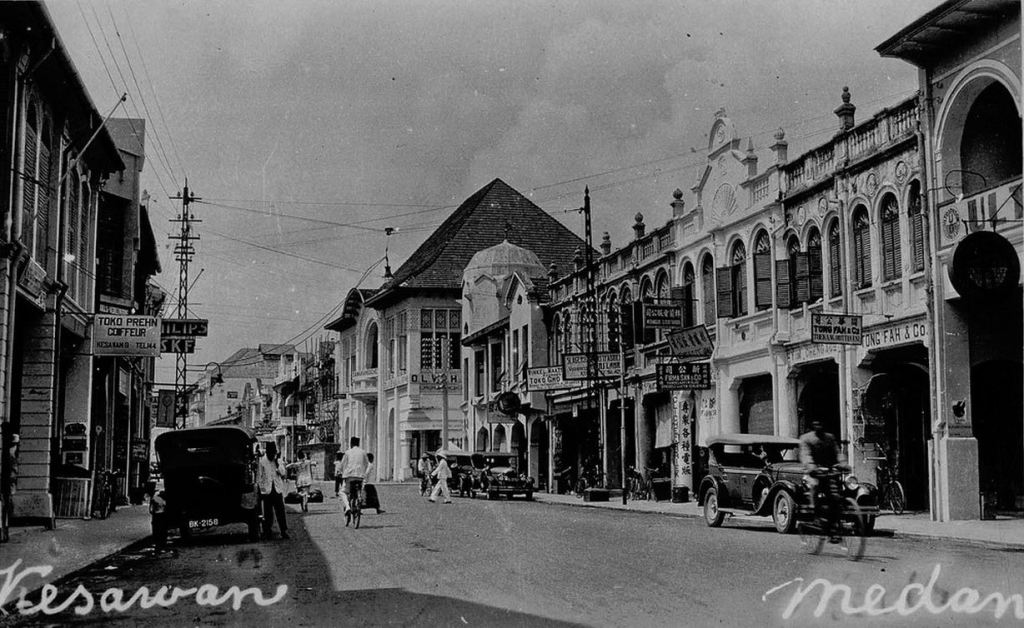
When it comes to the night view of Medan, people will definitely think of Canton Street (Jalan Surabaya). This street is very special. In the middle of the street, there are a number of kiosks built with wooden boards, starting from the junction of Canton Street and Kapitan Street and extending to the junction with Hakka Street. It is estimated to be about 500 meters long. Small vendors were doing business, selling a variety of small stuff, a dazzling array. When night falls, the entire street is brightly lit up, and there is an endless stream of customers who came. The shops on both sides of the street are also open and light up for business. The whole street is cut into two narrow streets by these kiosks, which can only be used as a single lane for a small passenger car to pass.
Zhang Rongxuan Street (Jalan Tjong Yong Hian), which intersects with Canton Street perpendicularly, is a “food street” with many restaurants and brilliant lights at night. There are three cinemas on Canton Street, they are Orion Bioscoop, Chenguang Bioscoop and Capitol Bioscoop. Rio on Kapitan Street, Rex and Cathay Bioscoop are also not far from Canton Street. Deli Bioscoop on Old Market (Lau Pasat).

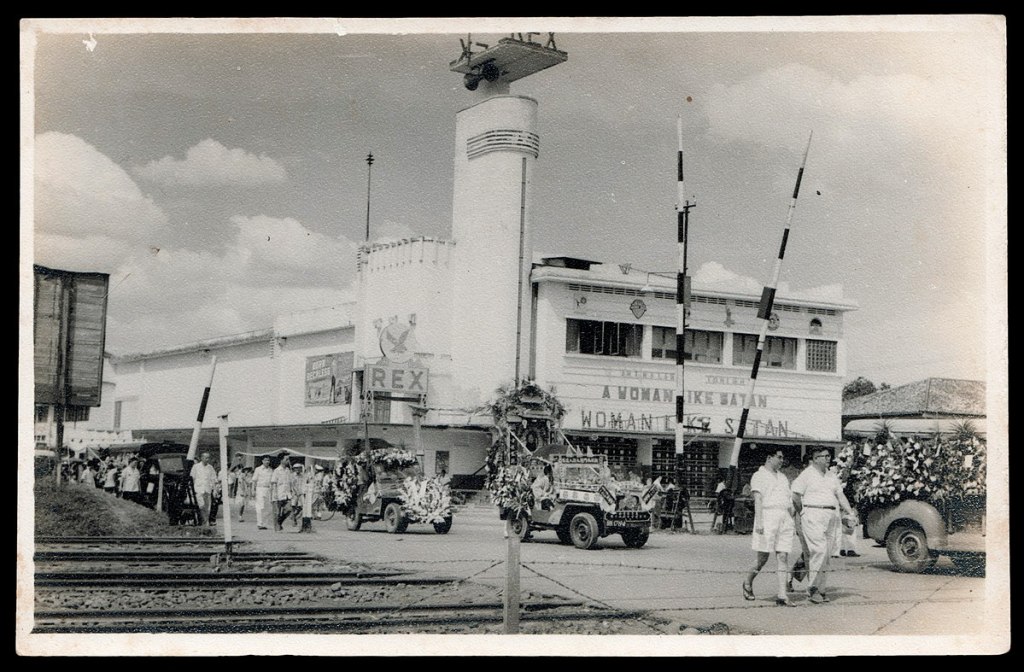
Those who watch movies in these movie theatres at night all like to come to Zhang Rongxuan Street for supper after the show. Some of our good classmates, if they don’t watch a movie in the evening, sometimes they will meet at the outdoor cafe next to the Cathay Cinema. The AA system is implemented, and they chat while drinking coffee. Only then went home separately. The night in Medan left me with many good memories.

The shops in Kesawan district specialize in high-end foreign goods. There is a candy stall called Toko De Zon store selling sweets made with roasted coffee beans. It is still unforgettable. When I think about it, I salivate but cannot see it again. In 1964, the Indonesian currency continued to depreciate, and it cost 30,000 to 40,000 yuan to buy a pack of rice. Then one day at noon, the Sukarno government raided and ordered the Indonesian dollar figure to be chopped off the back 3 zeros. Ten thousand becomes 10 rupiah, and one thousand becomes 1 rupiah. The sudden news made people caught off guard. Someone went shopping immediately before receiving the news. They took advantage of the vacancy. I heard that Toko De Zon was crowded that day and grabbed the goods. Toko De Zon suffered a particularly large loss.

 Stories from Deli
Leave a reply to Sander Lugtenburg Cancel reply